
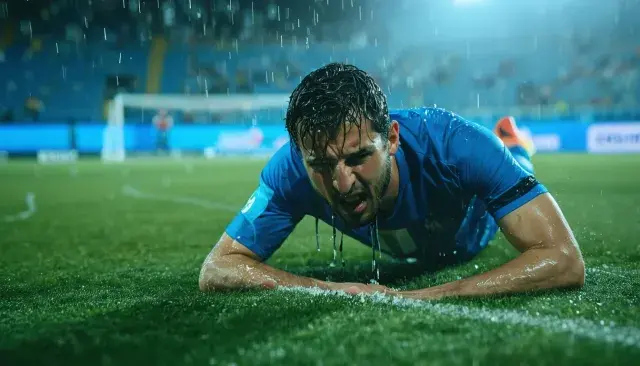

Italy's Football Federation president Gabriele Gravina resigned on Thursday following a penalty shootout loss to Bosnia and Herzegovina in Zenica during World Cup play-offs. The defeat represented the third consecutive failed qualification attempt, leaving Gianluigi Donnarumma among those overcome with emotion. This outcome exposes entrenched mismanagement that has eroded Italian football's standing and sparked demands for comprehensive reform.
Devastation Meets Defiance
Gianluigi Donnarumma felt the sting more acutely than most, having endured two prior qualification disappointments. Yet he posted a resolute message on social media: "Now, words don’t mean much, it's true, but there’s one thing I feel strongly inside and want to share with you. After such a great disappointment, we must find the courage to turn the page once again. And to do that, we need a lot of strength, passion and belief. Always believing. That’s the engine that drives us forward because life knows how to reward those who give everything, holding nothing back. And this is where we must start again. Together. Once more. To bring Italy back to where it deserves to be."
His words contrast sharply with a reality of systemic decline, where optimism feels misplaced after prolonged poor governance from federation to club levels.
Immediate Reckoning for Leadership
Fabio Capello labeled the result "a disgrace," one of the worst moments in recent Italian football history for a four-time world champion. Excuses rang hollow despite controversial decisions, including Alessandro Bastoni's dismissal and overlooked infractions by Bosnia's Tarik Muharemovic. Stefano Agresti captured the sentiment in Gazzetta dello Sport: "The truth is that Bosnia were stronger, and we are tired of thinking about how to improve: technique, speeches. The third Apocalypse is the worst."
Gennaro Gattuso faced swift scrutiny after steering a squad from disarray under Luciano Spalletti. He had warned of consequences: "I'll take credit if I manage to achieve the goal; otherwise I'll go and live far away from Italy." While some like Franco Baresi absolve him, his tenure likely ends soon, with Roberto Mancini mentioned as a potential returnee.
Gravina's Fall Under Pressure
Sport Minister Andrea Abodi demanded Gravina's exit the day after, insisting football requires rebuilding from the top. Re-elected with 98.68 percent support last year, Gravina initially resisted but folded amid a petition by Claudio Lotito, fan protests including eggs thrown at federation offices, and his own ill-judged remarks belittling other sports. After meetings with league and association representatives, he announced: “After many years, there is a feeling of sadness, but also of calm. I have to thank all the elements of the Federation... but I made my decision, it was a personal and carefully meditated one."
Structural Cracks Demand Overhaul
A successor election looms on June 22, with Giovanni Malago emerging as favorite among names like Giancarlo Abete and Beppe Marotta. Yet the role demands reversing decline marked by waning fan interest. Gravina highlighted only 33 percent of Serie A players qualify for national duty, a concern echoed by Demetrio Albertini: "The problem is that we have some good players, but not enough... Euro 2020 was a deserved win, but it didn’t address the underlying problem: there aren’t enough Italian players in Serie A."
Bureaucratic delays block modern venues, drawing UEFA president Aleksander Ceferin's warning that Italy risks losing Euro 2032 co-hosting rights. Serie A attracts aging stars unable to compete globally, reinforcing a perception of obsolescence. Concrete youth initiatives must materialize to revive a product losing its cultural grip.


